
The Formation: What Enzo Maresca Uses at Chelsea
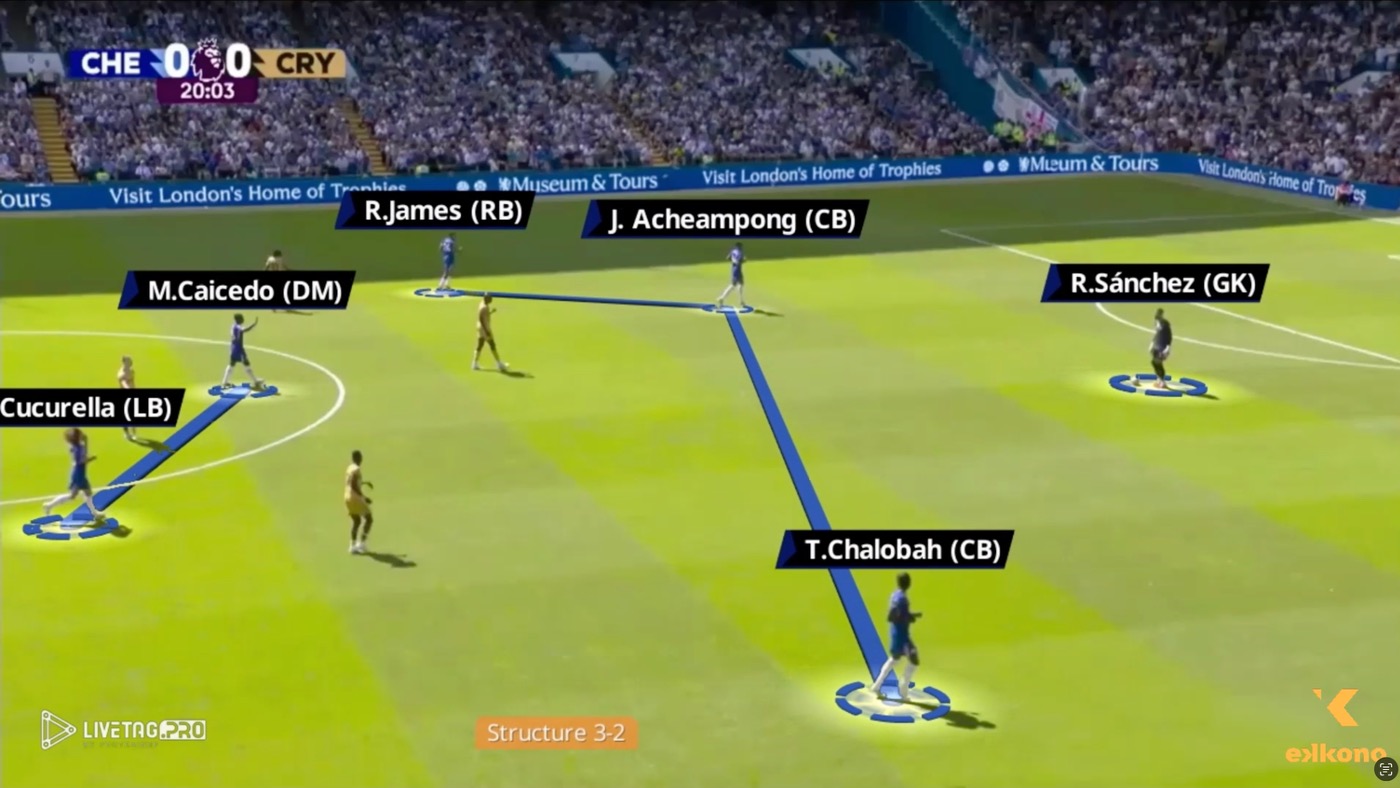
Enzo Maresca is known to deploy a structured 4-2-3-1 formation, but one that’s far more dynamic than its traditional interpretation. While the shape appears familiar, the movement within it is fluid, with constant rotations between the attacking midfielder and the central striker. The double pivot provides stability, allowing the full-backs — particularly Marc Cucurella and James — to push high and create overloads in wide areas.
What sets Maresca’s system apart is the asymmetry: one full-back surges forward while the other tucks in, maintaining defensive balance. The number 10 drops deep to link play, while the striker often drifts wide, creating space for late midfield runners. This flexibility allows Chelsea to control possession without becoming predictable — a rare feat in the modern Premier League.
Analysts suggest Maresca has instilled a level of tactical coherence not seen at Chelsea since the peak Conte years.
Out of Possession: Pressing Philosophy
Chelsea’s pressing under Maresca is not frenetic but highly coordinated. The team engages in a trigger-based press, activated by specific cues such as a backward pass or a poor touch. The front three and the attacking midfielder compress space rapidly, forcing opponents into wide areas where the full-backs and central midfielders are ready to pounce.
This wave-like pressure avoids individual duels and instead relies on collective movement. The double pivot holds its shape, preventing counter-attacks, while the centre-backs stay compact. This disciplined structure means Chelsea rarely get caught out of position — a significant improvement from previous seasons. The pressing intensity is carefully managed, peaking in key moments rather than sustained for 90 minutes.
In Possession: How Chelsea Build Play
Build-up starts from the back, with the goalkeeper acting as a deep-lying playmaker. The two centre-backs split wide, forming a triangle with the more progressive midfielder dropping between them. This creates passing lanes and forces the opposition to either commit a man or allow Chelsea to progress unchallenged.
Once past the first line, the tempo increases. The number 8 often makes diagonal runs into the half-spaces, while the winger cuts inside to form a narrow front line. The full-back on the strong side overlaps, stretching the defence. This phase is characterised by quick one-touch passing and intelligent movement, with players like Moisés Caicedo and Conor Gallagher crucial in maintaining rhythm. Chelsea are reportedly in excellent form when executing this phase under pressure.
- Base formation: 4-2-3-1 with fluid positional rotations
- Pressing style: trigger-based, coordinated wave pressure
- Build-up: triangle from back, progression through half-spaces
- Key roles: double pivot, inverted winger, deep-lying playmaker
- Philosophy: control, balance, and calculated transitions
Frequently Asked Questions
Q: What formation does Enzo Maresca play at Chelsea?
A: Maresca primarily uses a 4-2-3-1 formation, but with significant fluidity. The system features positional rotations, especially between the attacking midfielder and central striker, and relies on asymmetrical full-back movements to maintain balance while attacking.
Q: What is Enzo Maresca's coaching philosophy?
A: His philosophy centres on tactical discipline, intelligent pressing, and controlled build-up play. He emphasises team cohesion over individual brilliance, with a focus on positional awareness and structured transitions. The system is adaptable, switching between control and aggression based on the opponent.
Q: Is Enzo Maresca the best manager in the world?
A: While it's too early to crown him the best, Maresca is widely regarded as one of the most promising managers in world football. His work at Chelsea has drawn praise for its tactical clarity and player development, and he is believed to be among the top candidates for major international roles in the future.