LIVE — FootballPulseReal-time football news - Transfers, analysis and resultsLIVE — FootballPulseReal-time football news - Transfers, analysis and results
analysis
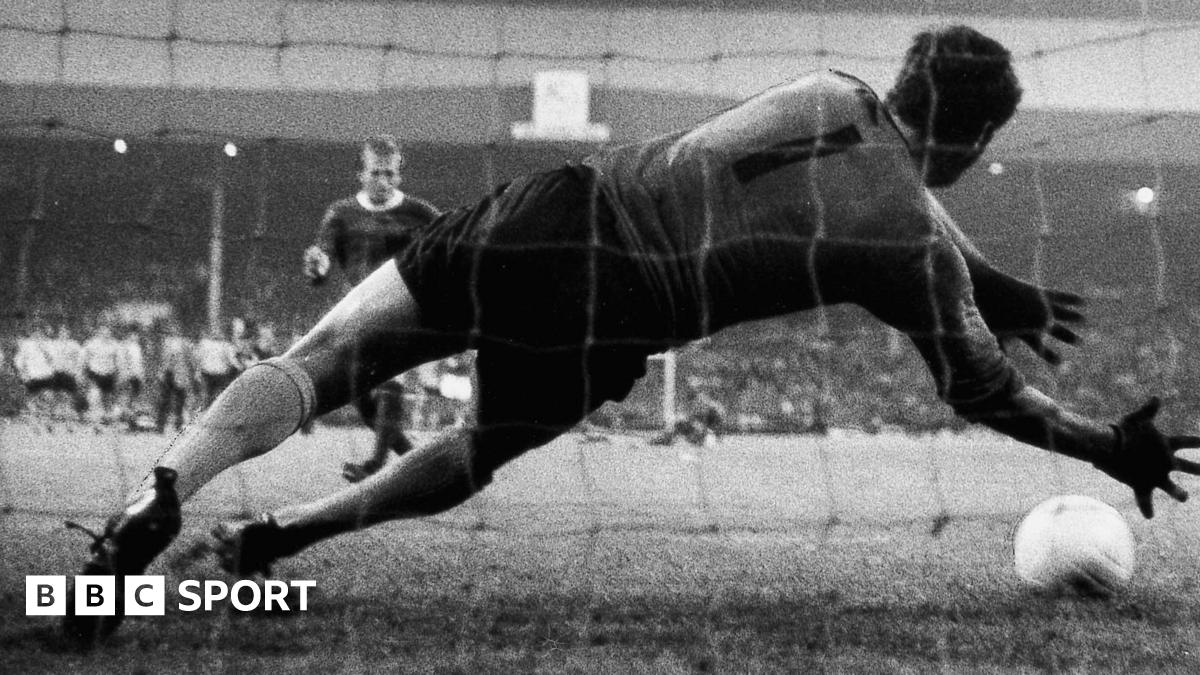
Football's Defining Shots: The Birth of the Penalty Shootout
Before penalties, draws could mean endless replays or a coin toss. The first official shootout was a dive into the unknown, a thrilling, terrifying experiment in decisive football.
The Crucible of Decision: When Football Embraced the Penalty Shootout
In the expansive saga of football, certain moments have irrevocably reshaped the game's very fabric, forging new legends and fresh anxieties. Among these, the introduction of the penalty shootout stands as a monumental landmark. There was a time when the outcome of a drawn match, even after extra time, was often left to the whim of a coin toss or the logistical nightmare of endless replays. This system, frequently branded as 'cruel' and unjust, left a bitter taste and a sense of incompleteness. The yearning for a more sporting, more dramatic, and above all, more definitive resolution became painfully evident.
Imagine the frustration of players, managers, and fans watching hours of effort reduced to a mere stroke of luck. The interminable replays not only tested teams' physical and mental endurance but also wreaked havoc on congested fixture lists without guaranteeing a clear outcome. It was against this backdrop, in pursuit of fairness and spectacle, that the idea of the penalty shootout germinated. A radical solution, undoubtedly, but one that promised a clear-cut ending, rooted in skill, nerve, and, it must be said, a significant dose of psychology.
A Leap into the Unknown: The Early Days of the Shootout
The concept of the penalty shootout, as we know it today, began to take shape in the 1960s. After decades where the fate of a qualification or a trophy hinged on a coin flip or exhausting replays, the International Football Association Board (IFAB) finally adopted the rule in 1970. UEFA, ever keen to innovate, quickly integrated it into its competitions, notably the Cup Winners' Cup in the 1970-71 season. The football world held its breath. Nobody truly knew what to expect from this nascent 'sudden death' decider.
"It was a strange feeling. We knew this was the new way to decide, but the tension was palpable. No one wanted to be the one to miss the first penalty in history."
This introduction marked a decisive break from the past, an acknowledgment that football, despite its ancient traditions, needed to evolve to offer a fair and captivating resolution. The initial shootouts were moments of rare intensity. Each player walking towards the penalty spot carried the weight of their team, their supporters, and the nascent history of this new form of judgment. The goalkeeper, previously relegated to a passive spectator during a coin toss, suddenly became a central figure, a potential hero, or an unfortunate scapegoat.
The Theatre of Pressure: The Psychology of the Penalty Spot
What makes penalty shootouts so utterly captivating is their intrinsically psychological nature. The ball, the goalkeeper, the taker — a brutal, unforgiving one-on-one. The eleven-meter distance seems to stretch into infinity. The stadium's deafening silence, broken only by pounding hearts, amplifies the pressure to unbearable levels. Every step towards the fateful spot is a march towards history, glory, or eternal regret. For the taker, it's about mastering nerves, picking a side, feigning the keeper, all while knowing that a single misstep can obliterate hours, months, even years of hard work.
The goalkeeper's role is equally critical. Faced with a duel they can only lose or heroically win, they must anticipate, observe, and sometimes, use their entire presence to intimidate. It's a macabre dance between instinct and strategy, where a fraction of a second can change everything. The 'lottery' of penalty shootouts is often criticized, yet it is also an unforgiving revealer of mental fortitude, technical skill under pressure, and the ability to embrace the decisive moment. It spotlights individuals within a collective sport, turning a striker into a hero or a defender into a heartbroken figure.
Unforgettable Moments: Glory, Tragedy, and Tactical Evolution
Since their introduction, penalty shootouts have delivered some of the most iconic and dramatic moments in football history. From World Cup finals to epic Champions League clashes, they have become the emotional climax, the ultimate arbiter when parity persists. Who can forget the 1994 World Cup final, where Roberto Baggio's shot soared over the bar, handing Brazil the title? Or the ice-cold nerve of Zinedine Zidane, followed by Pirlo's audacious 'Panenka,' and the denouement of the 2006 World Cup?
These moments, steeped in glory and tragedy, have cemented penalty shootouts in the collective imagination. They have also forced tactical evolution. Managers now incorporate penalty shootout drills into their training, studying opposing takers' preferences and goalkeepers' tendencies. The science of execution, pressure, and saving has become a distinct facet of the modern game. Players are selected not just for their intrinsic talent but also for their ability to handle the immense pressure of the moment, their Olympian calm in the face of such high stakes.
An Enduring Legacy: The Necessary 'Cruelty'
Despite recurrent debates about their 'cruelty' or 'lottery' aspect, penalty shootouts have proven their worth. They replaced an obsolete and inequitable system with a test of technical and mental strength. They offer a clear outcome, a winner and a loser, without ambiguity. It may be cruel for the vanquished, but it is the price of certainty for a just decision, made on the pitch and not by the random flip of a coin. Modern football, fast-paced and demanding, could no longer afford the endless replays of yesteryear.
Penalty shootouts are far more than just a method to separate teams. They are a celebration of human resilience, of the ability to excel under immense pressure. They have become an inseparable part of football folklore, a rite of passage for players, and a breath-taking spectacle for fans. Their introduction did not just end an archaic system; it added an extra layer of drama, heroism, and emotion to this universal sport, ensuring that the fate of a match would always be decided by the game itself, right up to its ultimate and thrilling climax.