world cupabout 4 hours ago
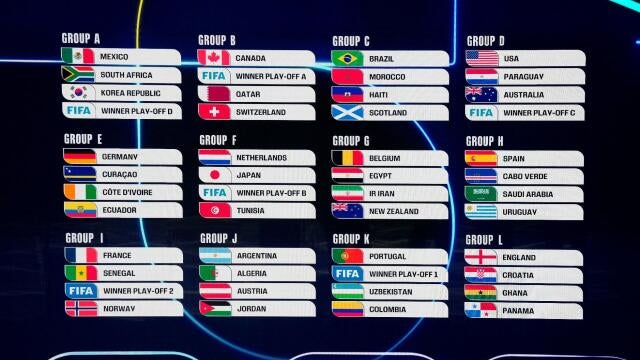
World Cup 2026 Groups: Predicted Draw, Key Dates and Full Preview
With the World Cup 2026 just months away, we break down the predicted groups, the revolutionary 48-team format, and the dark horses to watch.

From MetLife to Azteca, explore all 16 World Cup 2026 stadiums, host cities, capacities, and which matches are set to be played where. The ultimate pre-tournament guide.
Forty-eight teams. Three nations. One trophy. The 2026 World Cup is set to be the most expansive tournament in history, and the United States will serve as its beating heart. With **11 host cities**, the USA will stage approximately 80% of all matches, including both semi-finals and the final. From the urban sprawl of Los Angeles to the gridiron grandeur of Dallas, each stadium has been selected for its colossal capacity, cutting-edge facilities, and transport connectivity. **MetLife Stadium** in East Rutherford, New Jersey, is the frontrunner to host the final, with a capacity exceeding **82,000** and proximity to New York City’s global infrastructure.
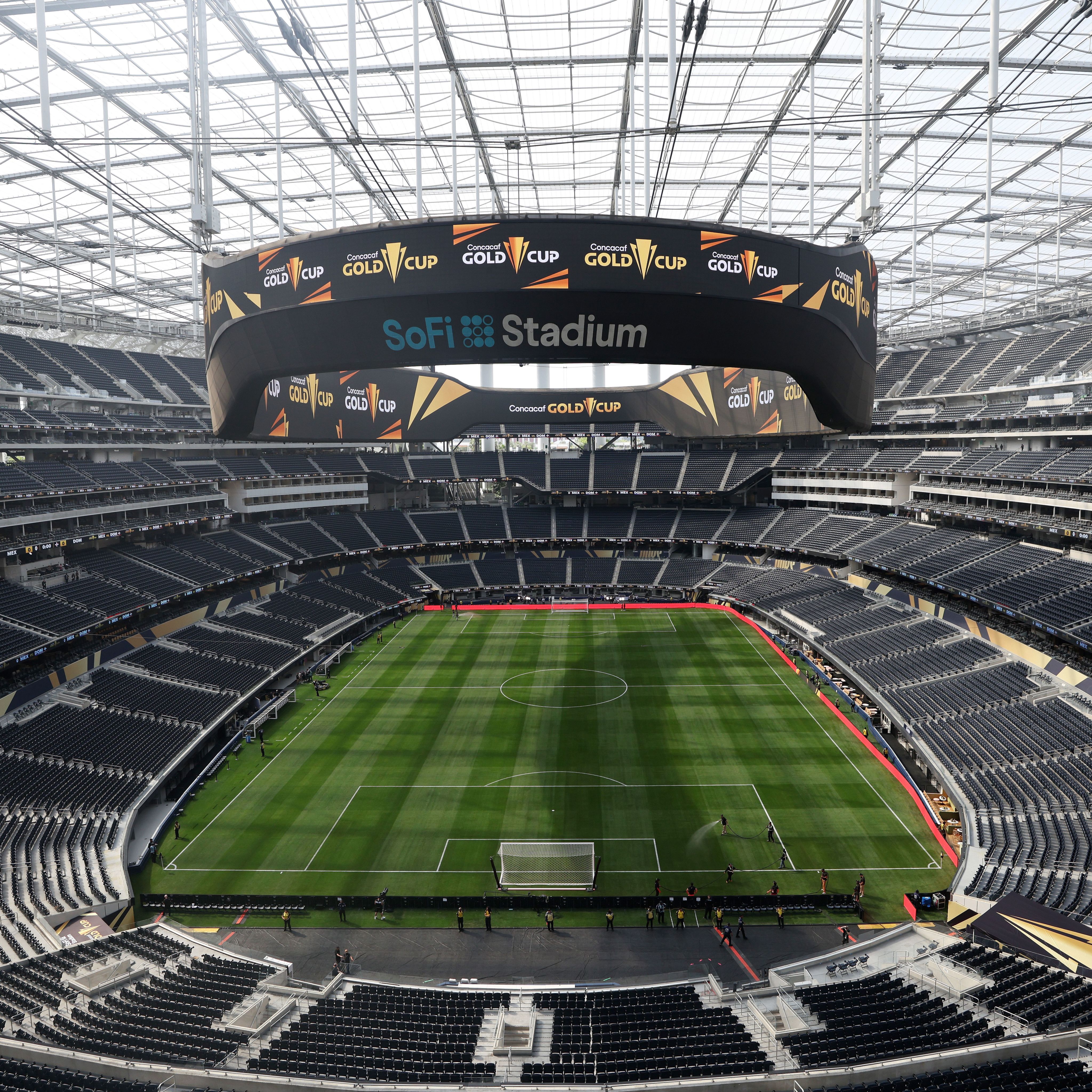
Modern coliseums like **SoFi Stadium** in Inglewood — home to NFL’s Rams and Chargers — will host quarter-finals, offering a futuristic bowl with a retractable roof and immersive video boards. Meanwhile, **AT&T Stadium** in Arlington, Texas, famed for its giant video screen, can swell to **80,000 seats** for major events. Analysts suggest the sheer scale and operational reliability of U.S. venues will ensure seamless tournament logistics, even with a record number of teams and fixtures.
"The U.S. stadium model — built for spectacle and efficiency — is perfectly suited to a 48-team World Cup," experts believe.
Mexico brings history, passion, and one of football’s most sacred grounds: the **Estadio Azteca** in Mexico City. This legendary venue will become the first stadium ever to host **three World Cup finals** (1970, 1986, 2026), a testament to its enduring legacy. With a tournament capacity of around **83,000**, the Azteca will reverberate with chants from some of the most fervent fans on the planet. It’s expected to host key group-stage clashes, including Mexico’s opening match against a European side.
Guadalajara’s **Estadio Akron** and Monterrey’s **Estadio BBVA** round out Mexico’s trio of venues. Both are modern, soccer-specific stadiums with capacities near **50,000**, known for their electric atmospheres and passionate local support. The high altitude of Mexico City — over 2,200 meters — could play a decisive tactical role, particularly for teams unaccustomed to thin air. This factor may give the host nation a subtle but tangible edge in crucial fixtures.
Canada, while hosting just two venues, is riding a wave of football momentum. **BMO Field** in Toronto and **BC Place** in Vancouver have both undergone expansions to reach tournament capacities of approximately **55,000**. These stadiums will primarily host group-stage matches, with Toronto likely to see Canada face a South American opponent.
The rise of Canadian football, spearheaded by stars like **Alphonso Davies** — who has recorded **8 assists and 3 goals** in the 2025–26 Bundesliga season — has elevated national expectations. Both cities offer distinct experiences: Toronto’s multicultural energy and Vancouver’s scenic backdrop of mountains and ocean. Experts believe these venues could become fan favourites for international supporters seeking a blend of sport and culture.
All signs point to **MetLife Stadium**. While the romantic notion of a final at the Azteca is powerful, FIFA prioritises logistical precision, media access, and global connectivity — all strengths of the New York/New Jersey region. MetLife has hosted Super Bowls, Champions League finals, and major concerts, proving its operational mettle.
SoFi Stadium is a close contender, but its location in a less transit-dense area of Los Angeles makes mass fan movement more challenging. The Azteca, while historic, faces infrastructure constraints. MetLife, by contrast, sits within one of the world’s most connected metropolitan zones. FIFA reportedly views it as the safest, most scalable option for the tournament’s climax.
Q: How many stadiums are in the 2026 World Cup?
A: There will be 16 stadiums in total: 11 in the United States, 3 in Mexico, and 2 in Canada. These venues were selected for their size, infrastructure, and ability to host large-scale international events.
Q: Which city hosts the World Cup final?
A: The final is expected to be held at MetLife Stadium in East Rutherford, New Jersey, USA. While Mexico City’s Estadio Azteca is iconic, the logistical and media advantages of the New York metropolitan area make it the preferred choice for FIFA.
Q: What are the World Cup 2026 host cities?
A: The host cities are Atlanta, Boston, Dallas, Houston, Kansas City, Los Angeles, Miami, New York/New Jersey, Philadelphia, San Francisco, Seattle, Mexico City, Guadalajara, Monterrey, Toronto, and Vancouver. Each offers unique cultural and sporting experiences for fans.