The Unforgettable Drama of the Penalty Shootout
Few moments in football are as universally captivating, as utterly nerve-shredding, as the penalty shootout. It's a solitary duel, a battle of wits and nerve, condensed into a few excruciating seconds that determine glory or despair. From World Cup finals to local cup ties, the spot-kick decider has become an indelible part of the beautiful game, providing football with its most dramatic and often heartbreaking conclusions. Yet, this high-stakes lottery, now a global phenomenon, was once a radical innovation, born out of a desperate need to end what many considered 'cruel' and unsatisfactory methods of breaking ties.
Imagine a game where 120 minutes of sweat, skill, and strategy could be nullified by the flip of a coin. This is the story of how football evolved, embracing a new, albeit controversial, system that forever changed how matches found their definitive end.
A 'Cruel' Past: Before the Spot-Kick Decider
Before the penalty shootout became standard practice, football grappled with a range of tie-breaking methods that often felt deeply unfair or logistically burdensome. The most infamous of these was the coin toss. After a gruelling 90 or 120 minutes, the fate of a team, and often an entire tournament campaign, could be decided by the random fall of a coin. This was a profoundly unsatisfying conclusion for players, managers, and fans alike, stripping the sport of its meritocratic essence.
“The sheer injustice of an entire team’s effort being reduced to a fifty-fifty chance, with no bearing on skill or performance, was a bitter pill for anyone involved in the game.”
Other methods included endless replays, where teams would face each other repeatedly until a winner emerged. While this maintained a degree of sporting fairness, the sheer physical and mental fatigue on players, coupled with the logistical nightmares of congested fixture lists, made it an unsustainable and often draining solution. These systems, while attempting to avoid pure chance, often felt like a prolonged purgatory, taking a toll on all involved.
The clamour for a definitive, sporting, and fair resolution grew louder. Football, a sport continuously evolving, could no longer afford to leave the outcome of its biggest encounters to chance or exhaustion.
The Genesis of a Game-Changer: The Idea of Twelve Yards
Karl Wald's Vision for a Sporting Resolution
It was in this atmosphere of frustration that the concept of the penalty shootout began to take shape. A key figure in its adoption was German referee Karl Wald. In 1970, exasperated by seeing crucial matches decided by coin tosses, he proposed a method of tie-breaking based on skill and nerve: a series of five penalty kicks. His idea was initially presented to the Bavarian Football Association, which adopted it, before gaining traction with the German Football Association (DFB). The concept quickly spread, and later that same year, FIFA officially approved the penalty shootout as a method for breaking ties.
The decision was met with some skepticism. Reducing the essence of a football match to a series of individual duels felt, to some purists, like a fundamental alteration of the game's collective spirit. However, the promise of a decisive, sporting outcome, free from random chance or endless replays, ultimately prevailed.
The Historic Debut: Stepping into the Unknown
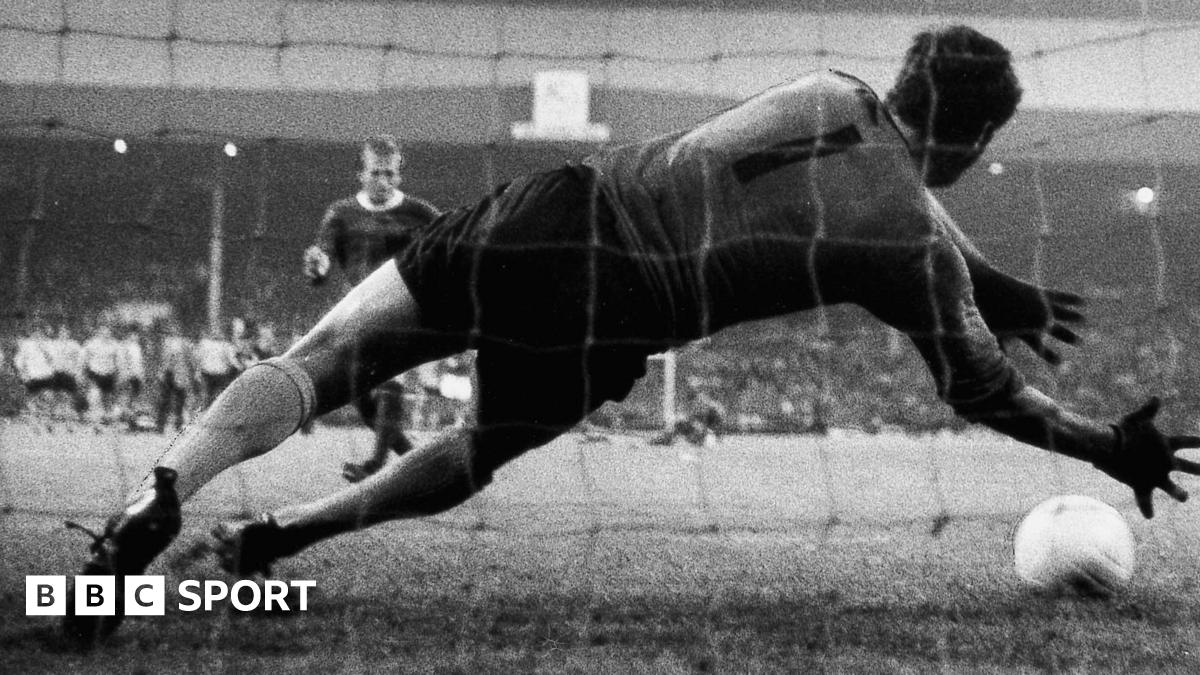
The moment of truth for this radical new rule is often attributed to the Watney Cup in England, specifically the match on August 5, 1970, between Manchester United and Hull City. The Watney Cup was an early-season invitational tournament, often used to trial new rules. This was a world first, and the atmosphere was electric.
“No-one knew what to expect at football's first official penalty shootout – and no-one wanted to go down in history as the first to miss.”
Uncertainty loomed large. Players from both Manchester United and Hull City were pioneers, navigating uncharted psychological territory. The weight of history rested on every kick, every save. The rules were fresh, the psychological landscape unexplored. George Best, Manchester United's iconic superstar, stepped up first and scored, planting the flag for a new era. Manchester United eventually won the shootout 4-3, but the real winner was the concept itself.
That day marked a new chapter in football's history – one defined by dramatic tension, individual glory, and instant tragedy. The system proved viable, exciting, and, crucially, it offered a sporting resolution to a tied match.
The Psychology of the Twelve Yards: A Mental Battleground
Since that historic first kick, the penalty shootout has evolved into a unique psychological spectacle. The walk to the spot is one of the loneliest journeys in sport. All eyes are on the kicker, the goalkeeper, and a solitary ball. It's a pure duel, a war of nerves where technique, confidence, and cunning are tested to their absolute limits.
For the kicker, it's about managing immense pressure: the expectations of millions, the goalkeeper's intimidating stare, the weight of the moment. A missed penalty can haunt a career. For the goalkeeper, it's an opportunity to become a hero with a single save, diving the right way or unsettling the opponent. These moments have forged legends and, heartbreakingly, broken spirits. Who can forget the agony in Roberto Baggio's eyes in 1994, or the legendary save by Iker Casillas?
From Novelty to Necessity: Penalties in Modern Football
Following its successful introduction, the penalty shootout rapidly spread across global competitions. The European Championships, Copa América, the Champions League, and of course, the FIFA World Cup, all embraced this definitive tie-breaking method.
Their presence in the knockout stages of the biggest tournaments has led to some of the most memorable and agonizing moments in football history. They have been the catalyst for glory for entire nations, like Italy in 2006 or Argentina in 2022, and the source of unimaginable heartache for others.
The Debate Rages On
Despite their universal adoption, penalty shootouts continue to spark passionate debate. Are they fair? Do they truly reflect the stronger team after 120 minutes? Some purists argue that they reduce a team sport to a series of random individual actions. Others contend that they add a fascinating strategic and psychological dimension, providing the ultimate test of character.
Regardless of opinion, one thing is certain: penalty shootouts are an indelible part of modern football. They offer unparalleled spectacle in terms of tension and drama, guaranteeing a definitive outcome that, for better or worse, remains etched in collective memory.
The Legacy of a Game-Changer
The introduction of the penalty shootout was a monumental innovation, replacing 'cruel' systems with a solution that, while dramatic, was sportingly fairer. It transformed how tied matches are resolved, bringing an unprecedented intensity and thrill to the beautiful game. From that first hesitant kick to its regular appearances on the biggest global stages, the penalty shootout is proof that football is a living sport, capable of evolving to deliver ever more emotion. It embodies the very essence of footballing destiny, where a single kick can change history.