What Is Half-Spaces Football?
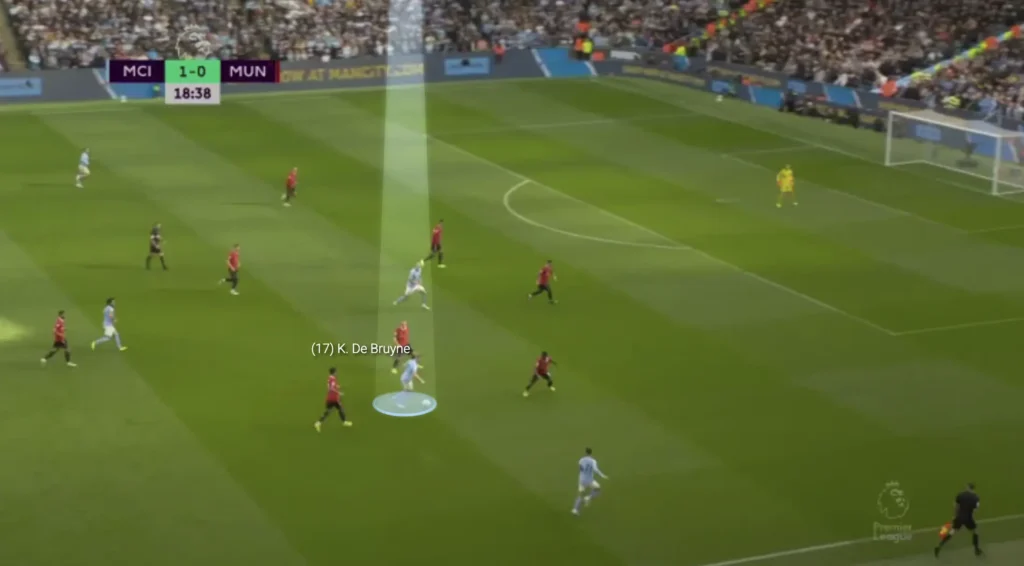
The term half-spaces refers to the narrow vertical zones between the wide channels and the central axis of the pitch. Not quite the wing, not quite the middle, these corridors have become the tactical epicentre of modern football. It’s here, in the half-spaces, that elite teams break down compact defences and create high-quality chances.
Unlike traditional wingers who hug the touchline, modern attackers and midfielders drift into these areas to receive the ball between the lines. This positioning allows for better vision, cleaner passing lanes, and more dangerous shooting angles. Players like Bernardo Silva, James Maddison, and Joshua Kimmich thrive here, where intelligence and timing matter more than pace.
"The half-spaces are where games are won and lost — it's the invisible battleground," experts suggest.
The Evolution of a Tactical Revolution
The concept isn’t new. The Barcelona of Pep Guardiola pioneered it, using Lionel Messi as a false nine to drag defenders out of position while Xavi and Iniesta operated in the half-spaces. But it was Manchester City’s evolution under Guardiola that turned it into a science — combining inverted full-backs, double pivots, and central midfielders who act as vertical connectors.
Now, almost every top team uses it. Real Madrid leverages Kroos and Modrić in these zones to control tempo. Bayer Leverkusen under Xabi Alonso used it to devastating effect in their 2024 double-winning season. And now, Liverpool under Arne Slot are embedding it into their DNA.
Arne Slot and Liverpool’s Half-Space Ambition
Arne Slot, widely regarded as one of the most progressive managers in Europe, has brought a clear tactical identity to Liverpool. After a first leg against Paris Saint-Germain where his side were, in his own words, "in survival mode", Slot knows Anfield must be more than a fortress — it must be a laboratory of precision.
His system relies on midfielders like Alexis Mac Allister and Ryan Gravenberch operating in the half-spaces, receiving between the lines and driving forward. Full-backs like Trent Alexander-Arnold stay wide to stretch the play, while attackers like Mohamed Salah and Luis Díaz cut inside to exploit the space. It’s a model built on control, not chaos.
How to Defend Against Half-Space Dominance
Stopping half-space play requires extreme discipline. Midfielders must tuck in to cover the channels, full-backs must resist overcommitting, and central defenders must stay compact. Players like Declan Rice and Manuel Akanji have become invaluable for their ability to read and disrupt play in these zones.
Some managers, like Luciano Spalletti at Napoli, use a 4-2-3-1 with one midfielder dedicated solely to half-space coverage. Others, like Mikel Arteta, rely on aggressive pressing triggers the moment the ball enters these areas. But as Liverpool showed in their comeback against PSG last season, even the best systems can be cracked with the right movement.
Why Half-Spaces Are Defining Modern Football
The truth is, football has shifted. The era of wing crosses and long balls is fading. Today’s game is won through intelligent positioning, vertical progression, and control of the half-spaces. The 2026 World Cup qualifiers have already shown this trend, with Spain, Germany, and England dominating through structured play in these zones.
Liverpool’s fate against PSG may well hinge on who owns the half-spaces at Anfield. As Slot said: "Football has shown many times everything is possible." But in 2026, possibility is earned not by hope — but by tactical mastery.
The half-spaces are the vertical zones between the wings and the centre, crucial for breaking down defences.
Arne Slot has implemented a half-space-focused system at Liverpool to increase control and creativity.
Top teams like Man City, Real Madrid, and Bayern use half-spaces to dominate possession and create chances.
Defending the half-spaces requires compact midfield shapes and intelligent full-back positioning.
Frequently Asked Questions
Q: What is half-spaces in football?
A: Half-spaces are the narrow vertical zones between the central third and the wide areas of the pitch. They are used by midfielders and attackers to receive the ball between defensive lines, enabling better passing angles, shooting opportunities, and control of the game’s tempo. This area is critical for teams looking to break down compact defences.
Q: Which teams use half-spaces?
A: Top teams like Manchester City, Real Madrid, Bayern Munich, and Liverpool under Arne Slot actively exploit the half-spaces. These clubs use technically gifted midfielders, inverted full-backs, and mobile forwards to dominate play in these zones, making them a cornerstone of modern tactical setups.